The condition
What is childhood myopia?
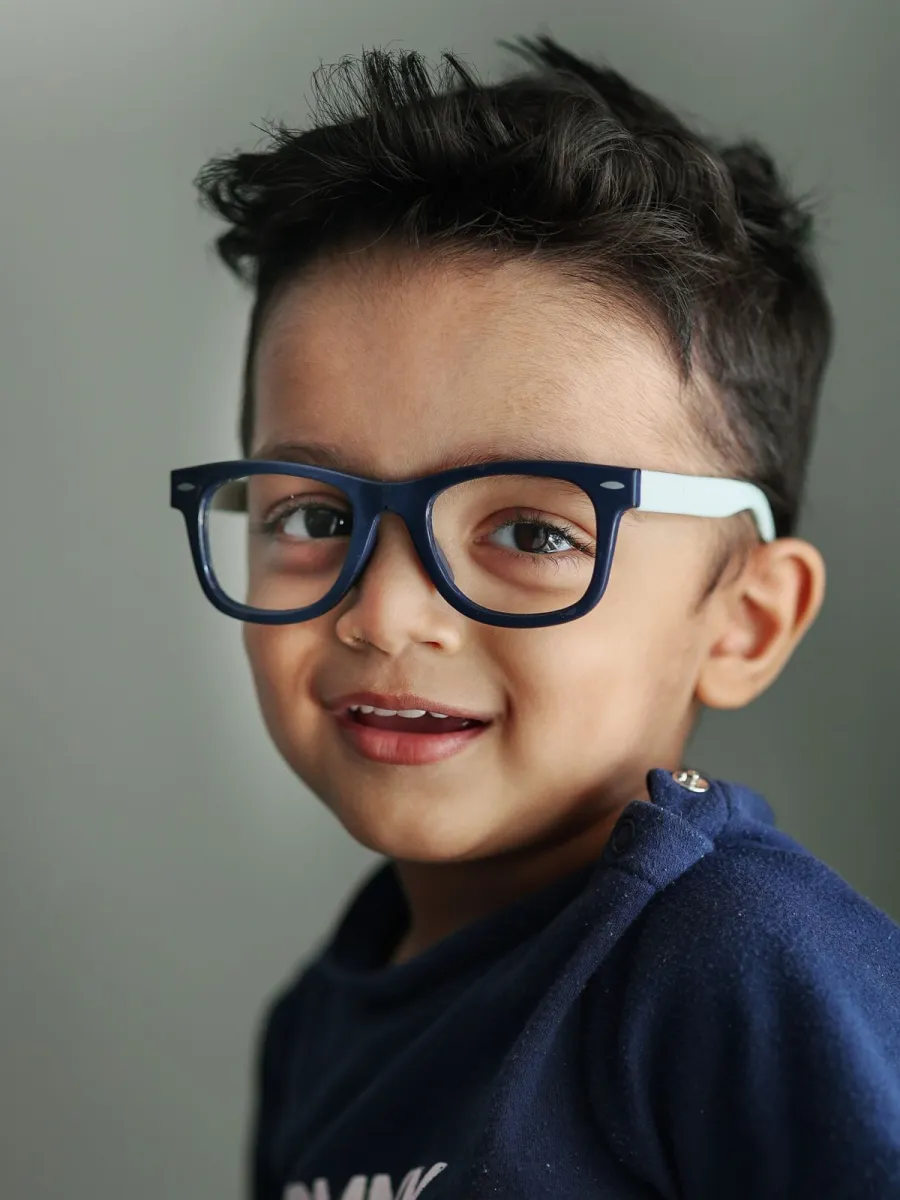
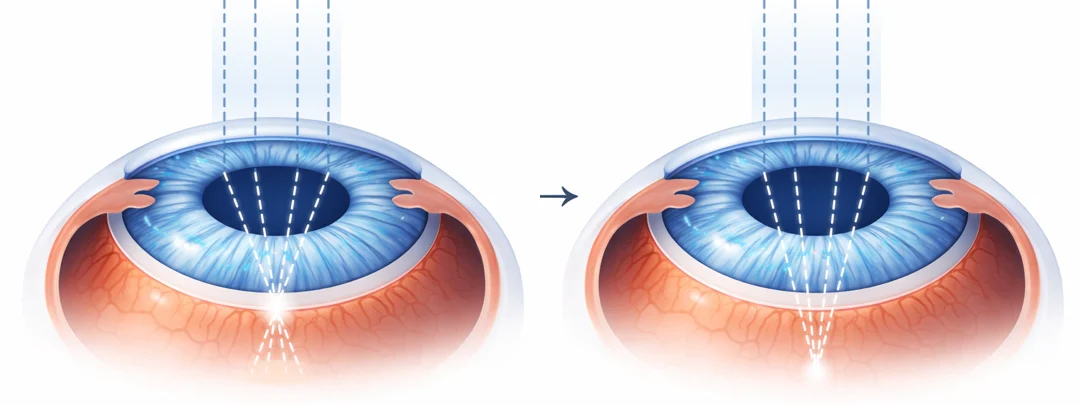
Myopia makes distant things look blurry: the board at school, street signs, the TV. In children it usually appears during the school years and tends to increase as they grow, because the eye becomes longer than normal and the image focuses in front of the retina.
Glasses correct the blur, but they don’t stop that growth. That is why we talk about myopia control: follow-up designed to slow its progression, not just to update the prescription every year.
Why it matters
Why it pays to slow it down early
High myopia in adulthood is linked to a higher risk of retinal problems and other eye diseases. Childhood, while the eye is still growing, is the best time to limit how far it progresses.
Signs
Signs your child may be nearsighted
Squinting
To see far away, or sitting very close to the TV and screens.
Trouble seeing the board
Copies with mistakes or asks to sit at the front of the class.
A rising prescription
Needs stronger glasses at every check-up.
The evaluation
What the evaluation involves
We examine your child’s eyes calmly and explain what we find, so the family can decide with all the information.
- 01Medical history: how long they have worn glasses, how the prescription has changed and whether either parent is nearsighted.
- 02Precise measurement of the prescription; in children, drops that relax focusing are often used to measure it accurately.
- 03A complete eye exam, including the retina.
- 04A treatment plan and follow-up schedule, explained to the family.
The treatment
Options to slow myopia
Several evidence-based options exist today to slow myopia progression in children. The right one depends on age, prescription and how fast it has progressed; it is chosen at the evaluation and adjusted at each check-up.
Low-dose atropine drops
Used at home once a day, alongside the child’s usual glasses.
Special lenses
Glasses or contact lenses designed to slow the eye’s elongation while also correcting vision.
Orthokeratology
Rigid contact lenses worn overnight that temporarily reshape the cornea.
Habits matter too: spending time outdoors every day and taking breaks while reading or using screens helps look after children’s eyes.
Book your child’s evaluation
If they struggle to see far away or their prescription goes up every year, we review their case and explain the options clearly.
Common questions
Frequently asked questions
Do regular glasses slow myopia?
No. They correct the blur but do not stop the eye from elongating. Specific myopia control treatments exist for that.
When should I have my child checked?
As soon as you notice they struggle to see far away, and whenever their prescription rises from one check-up to the next. The earlier control starts, the more room there is to slow progression.
Is laser surgery an option for children?
No. Refractive surgery is considered in adults with a stable prescription. In children the goal is to slow myopia while the eye is still growing.
How often are the check-ups?
It depends on the treatment and on your child’s age. At the evaluation we give you a follow-up schedule.